
 Back surgery can be a turning point, but for many people, it isn’t the end of the road when it comes to pain or limited mobility. Disc pressure, nerve irritation, and degeneration in areas above or below a surgical site are common, and that’s where spinal decompression therapy can still play a meaningful role.
At Community Chiropractic Center, our doctors bring more than 75 years of combined experience to every patient evaluation. We serve Blue Bell, Spring House, and the surrounding Montgomery County area, and we understand that no two spines or surgical histories are the same.
Why Decompression Can Still Help After Surgery
Spinal decompression works by gently stretching the spine in a controlled, computer-guided pattern. This reduces pressure on discs and nerves, improves circulation, and creates a better environment for healing. Surgery addresses one area, but surrounding discs and joints can still experience compression, inflammation, or ongoing degeneration over time.
Decompression is often considered for patients dealing with:
- Persistent pain that continues after surgery
- Degenerative disc disease above or below a fusion
- Sciatica or radiating leg pain
- Bulging or herniated discs in untreated areas
- Stiffness and limited mobility during recovery
In many cases, decompression is not applied directly over a surgically altered segment, especially where metal hardware is present. Other regions of the spine, however, may still be safely and effectively treated.
When It May Not Be the Right Fit
Decompression is not appropriate for every post-surgical situation. It would generally not be recommended if a patient is still in the early healing phase after surgery, if a fusion with hardware is present in the exact area needing treatment, or if there is severe osteoporosis or active spinal instability. That’s why a thorough consultation, exam, and imaging when needed are always the starting point before any care begins.
A Gentle, Collaborative Approach
Our doctors focus on gentle, targeted care that supports healing without adding stress to the body. Decompression is often paired with chiropractic adjustments, muscle support therapies, and personalized home recommendations to help stabilize and build on your results.
As Dr. Mark Legnola explains, “Just because someone has had back surgery doesn’t mean they’re out of options. Many patients still have disc pressure or nerve irritation in other areas. With the right evaluation, spinal decompression can be a safe and effective way to help them continue healing without additional surgery.”
What to Expect During a Session
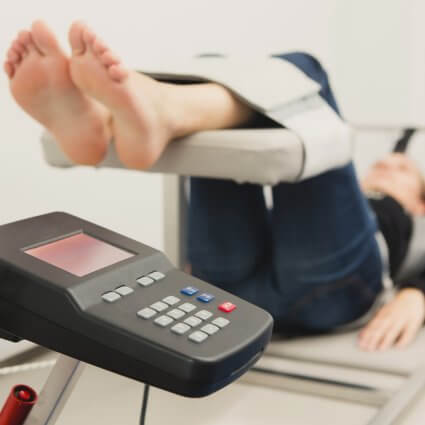
Most sessions last about 15 to 25 minutes. You’ll lie comfortably on a specialized decompression table while the treatment alternates between gentle stretch and relaxation phases. Many patients describe it as soothing, and some actually fall asleep during care!
Find Out If Spinal Decompression Is Right for You
If you’ve had back surgery and still aren’t feeling the way you had hoped, decompression therapy may be worth exploring. The best first step is scheduling an evaluation so our team can assess your history and determine whether this gentle, non-surgical option is right for you.