Disc Issues Treatment in Blue Bell and Spring House
Understanding Bulging, Herniated and Degenerative Discs
Hearing that you have a bulging or herniated disc can be unsettling. What caused it? Will it get worse? And, most importantly, what can you actually do about it?
At Community Chiropractic Center, we help patients throughout Blue Bell, Spring House, and Montgomery County understand what may be behind their spinal pain, and figure out what kind of conservative care makes sense.
Depending on your condition, symptoms, and exam findings, your care may include chiropractic treatment, spinal decompression, movement rehabilitation, and recommendations built around you.
What Is a Spinal Disc?
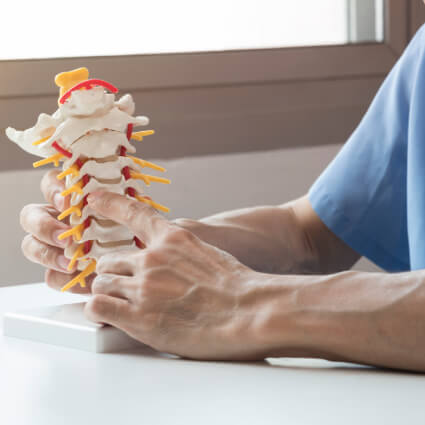
The discs between the vertebrae in your spine act as cushions. They help your spine move while absorbing everyday stress.
Each disc has a tougher outer portion surrounding a softer inner portion. Over time, normal wear and tear, repetitive stress, injury, or other factors can change how a disc holds up.
Not every disc abnormality causes symptoms, either. Some people walk around with bulging or degenerating discs and never know it, while others end up with significant pain or nerve-related symptoms.
That’s exactly why understanding your individual condition matters.
What Is a Bulging Disc?
A bulging disc happens when the outer portion of a spinal disc extends beyond its normal boundaries.
That doesn’t automatically mean a nerve is being compressed, or that surgery is on the table. Plenty of people have no symptoms at all.
When a bulge does affect nearby spinal structures, though, it can contribute to pain, stiffness, numbness, tingling, or other symptoms.
What Is a Herniated Disc?
A herniated disc happens when material from inside the disc pushes through a weakened or damaged spot in the outer portion.
Depending on where the herniation occurs, it can irritate or put pressure on nearby nerves. A disc problem in the lower back, for example, may send symptoms traveling through the buttock and leg. A cervical disc problem can cause symptoms that extend into the shoulder, arm, or hand instead.
Common Symptoms of Disc Problems
Disc-related symptoms vary quite a bit depending on location and severity. You may notice:
- Localized back or neck pain
- Stiffness
- Pain that travels into an arm or leg
- Sciatica
- Numbness or tingling
- Muscle weakness
- Pain that worsens with certain movements or positions
- Difficulty sitting, standing, walking, or keeping up with normal activities
Not every symptom on this list points to a disc problem. That’s exactly why a proper examination matters.
What Causes Disc Problems?
Disc changes can develop for a lot of different reasons. Common contributing factors include:
Age-Related Changes
Spinal discs naturally lose some water content and flexibility as we age. These changes affect how the spine moves and handles everyday stress.
Repetitive Stress
Repeated lifting, bending, twisting, prolonged sitting, and similar activities all place ongoing stress on the spine.
Injury
A sudden injury or accident can damage a disc, or aggravate a problem that was already there.
Postural and Movement Factors
How you sit, stand, lift, and move influences how much stress ends up on different areas of your spine.
Degenerative Changes
Over time, discs can become thinner or less resilient. These changes can contribute to stiffness and other spinal symptoms.
How Can Chiropractic Care Help With Disc Issues?
Treatment depends on the individual and what’s actually causing the symptoms.
At Community Chiropractic Center, your doctor starts by evaluating your condition and figuring out what type of care makes sense. Depending on your needs, a treatment plan may include:
- Chiropractic adjustments or mobilization
- Spinal decompression therapy
- Movement and rehabilitation exercises
- Soft-tissue support
- Postural recommendations
- Home exercises and lifestyle recommendations
The goal is a plan built around your condition, not the same treatment handed to every patient who walks through the door.
Spinal Decompression for Disc Issues
For some patients with disc-related pain, spinal decompression may be an appropriate non-surgical treatment option.
We use the DOC Decompression Table, a computer-guided system that delivers controlled cycles of spinal decompression. It’s designed to gently unload targeted areas of the spine, and may be considered for certain patients with:
- Bulging or herniated discs
- Disc-related sciatica
- Degenerative disc changes
- Certain types of chronic back or neck pain
- Symptoms associated with spinal compression
Whether decompression fits depends on the specific disc problem, your symptoms, medical history, and exam findings.
Learn More About Spinal Decompression Therapy
Why Choose Community Chiropractic Center?
Our three chiropractors have been practicing since 1997 and work together to provide individualized care. We have offices in Blue Bell and Spring House, serving patients throughout Montgomery County and the surrounding communities.
Rather than assuming every disc problem calls for the same treatment, we take the time to understand your symptoms, evaluate your condition, and walk you through your options.
If spinal decompression turns out to be appropriate, we can build it into a broader treatment plan designed around what you actually need.
Frequently Asked Questions
Can a disc problem cause sciatica?
That said, sciatica can have several different causes, including spinal stenosis and other conditions.
Can a disc problem cause neck or arm pain?
What if I’ve been told I need surgery?
Depending on your condition, conservative care may be worth discussing before pursuing an invasive procedure. At the same time, not every disc problem should be treated conservatively, and some situations do call for medical or surgical care.
Our doctors can evaluate your condition and help you understand whether chiropractic care or spinal decompression is appropriate, or whether you should be referred for additional medical evaluation.
Depending on your condition, conservative care may be worth discussing before pursuing an invasive procedure. You may also want to read more about whether you really need back surgery for a bulging disc.
What if I’ve already had back surgery?
Depending on your surgical history, where your symptoms are located, and whether hardware is present, spinal decompression may or may not be appropriate.
When should you have a disc problem evaluated?
Seek prompt medical attention for serious or rapidly worsening symptoms, such as significant or progressive weakness, loss of bowel or bladder control, or numbness in the groin or saddle area.
For ongoing pain, numbness, tingling, or radiating symptoms, an evaluation can help determine what’s actually contributing to the problem and what options make sense.
Find Out What May Be Causing Your Symptoms
A disc diagnosis can sound intimidating, but it doesn’t tell the whole story.
If you’re dealing with back or neck pain, sciatica, numbness, tingling, or other symptoms that might trace back to a disc problem, the first step is simply understanding what’s actually happening.
Community Chiropractic Center can evaluate your condition and help you understand your options.
