
Spinal Decompression Therapy in Blue Bell and Spring House
A Non-Surgical Approach for Disc, Nerve and Spinal Pain
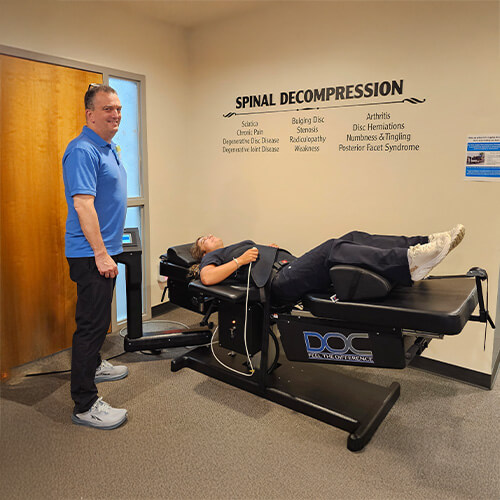 Chronic back or neck pain can interfere with nearly every part of your daily life. Maybe you’ve already been told that a bulging or herniated disc, spinal stenosis, degenerative disc changes, or another spinal condition is behind your symptoms. Maybe you’re just looking for an option that doesn’t start with medication, injections, or surgery.
Spinal decompression therapy is a non-surgical treatment option that may be appropriate for certain types of disc and nerve-related conditions.
At Community Chiropractic Center, we use the DOC Decompression Table, a computer-guided system built to deliver controlled, targeted decompression of the spine. Treatment is individualized based on your condition, symptoms, and evaluation, not a one-size-fits-all setting.
Our doctors provide spinal decompression at our Blue Bell and Spring House offices, serving patients throughout Montgomery County and the surrounding communities.
What Is Spinal Decompression Therapy?
Spinal decompression is a specialized form of controlled spinal traction, designed to gently unload targeted areas of the spine.
During treatment, you lie comfortably on a specialized table while the system applies a carefully controlled pulling force, followed by periods of relaxation. The goal is to reduce mechanical stress on targeted spinal structures, and it may be used as part of a broader conservative care plan.
This isn’t the same as simply stretching the spine. Computer-guided decompression can be adjusted to the individual patient and to the specific area being treated.
Decompression at our practice may be combined with chiropractic care, movement recommendations, rehabilitation, or other supportive therapies when it makes sense to do so.
What Conditions May Benefit From Spinal Decompression?
Spinal decompression isn’t appropriate for every condition, or every patient. But after a thorough evaluation, it may be considered for certain patients experiencing:
- Herniated or Bulging Discs
When a spinal disc bulges or herniates, it can irritate or put pressure on nearby nerves. Depending on the location and severity of the problem, decompression may be one conservative option worth exploring. - Sciatica
Sciatica can develop when structures in the lower spine irritate or compress the sciatic nerve. For the right patients, whose symptoms trace back to disc or spinal compression, decompression may be included as part of a treatment plan. - Spinal Stenosis
Spinal stenosis involves narrowing around the spinal canal or nerve pathways. Depending on the individual’s condition, decompression may be considered as part of a conservative approach to managing symptoms. - Degenerative Disc Changes
Spinal discs naturally change as we age. Sometimes that degeneration contributes to pain, stiffness, or other symptoms. Your doctor can determine whether decompression fits based on your exam and overall condition. - Chronic Back or Neck Pain
Some patients live with persistent back or neck pain tied to disc problems, spinal compression, or degenerative changes. When these underlying factors are contributing to symptoms, decompression may be worth considering. - Numbness, Tingling or Radiating Pain
When spinal structures irritate nearby nerves, patients may notice numbness, tingling, or pain traveling into an arm or leg. These symptoms need a proper evaluation before anyone can say whether decompression is the right fit. - Failed Back Surgery Syndrome
Patients who still have symptoms after back surgery sometimes have issues involving other spinal levels, discs, or surrounding structures. Decompression may be an option for some of these patients, but previous surgery and any hardware need to be carefully considered first.
How Does the DOC Decompression Table Work?
Community Chiropractic Center uses the DOC Decompression Table to provide computer-guided spinal decompression.
Instead of applying the same traction force to every patient, the system lets us target and adjust treatment based on what each individual actually needs.
Treatment alternates between controlled periods of tension and relaxation. Sessions typically run about 15 to 25 minutes, and many patients find the process comfortable, even relaxing.
Your doctor determines the right approach based on your exam and your condition.
What Happens Before Spinal Decompression?
Before we start decompression therapy, we want to be sure it’s the right call for you.
Your first step is a consultation and exam, where we will:
- Review your health history and symptoms
- Talk through how your condition affects your daily life
- Perform an appropriate chiropractic and orthopedic examination
- Review existing imaging when it’s available
- Take X-rays when clinically appropriate
- Determine whether spinal decompression is appropriate
- Walk you through your recommended care plan and answer your questions
You don’t need to know whether you’re a candidate before you reach out. That’s exactly what the evaluation is for.
Our goal is simply to figure out whether this approach makes sense for your specific condition.
What Makes Us Different?
When you’re dealing with a disc problem or chronic spinal pain, a treatment machine isn’t really what you’re after. You want to know someone is looking at the whole picture.
At Community Chiropractic Center, three experienced chiropractors work together to provide individualized care. Our doctors have been practicing since 1997, and they take the time to actually understand your symptoms, health history, goals, and lifestyle.
We don’t assume spinal decompression is right for everyone. Figuring out whether it’s appropriate for you comes first.
When it is a fit, decompression can be woven into a broader plan that may include chiropractic adjustments, movement rehabilitation, home recommendations, and other supportive care.
A Patient’s Experience With Spinal Decompression
It was definitely a commitment…but 3 1/2 months later, I can say it was well worth it. My neck and back pain are so much more improved.”
One Community Chiropractic patient came to the practice with cervical spinal stenosis, along with neck and back pain, plus numbness and pain in her arm and hands. After talking through her condition with Dr. Mark, she decided to undergo a course of spinal decompression.
She describes the treatment as a worthwhile commitment, and says the improvement she experienced has lasted.
Frequently Asked Questions
What does spinal decompression feel like?
You’ll be positioned comfortably on the table and secured with a harness while the system moves through controlled cycles of stretching and relaxation. Some patients find it relaxing enough that they doze off during their session.
If something feels uncomfortable during treatment, your doctor can adjust the settings.
How many treatments will I need?
A typical decompression program may run somewhere between 18 and 30 sessions over several weeks, though your individual recommendation depends on your condition, symptoms, exam findings, and how you respond to care along the way.
Sessions may start out more frequent and then get adjusted as your condition progresses.
The goal here isn’t to rack up treatments for the sake of it. Your doctors track your progress and shape your care plan around what’s actually working.
Is spinal decompression safe for everyone?
Certain conditions or circumstances can make decompression inappropriate, or require modifications to treatment. These include pregnancy involving the lower back, severe osteoporosis, an abdominal aortic aneurysm, certain spinal surgeries or implanted hardware, active spinal infection, metastatic cancer, and a handful of other medical considerations.
This is exactly why we perform a consultation and exam before recommending decompression in the first place.
If you’ve had spinal surgery, have significant medical conditions, or simply aren’t sure whether decompression is right for you, talk with our doctors before starting treatment.
Is spinal decompression the same as traction?
Both use controlled pulling forces on the spine, but the DOC Decompression Table allows treatment to be more specifically targeted and adjusted to the individual.
Your doctor can walk you through the difference and help determine which approach, if any, fits your condition.
Is spinal decompression painful?
Treatment is controlled and can be adjusted to your comfort level. If something feels off, tell your doctor so the treatment can be modified.
Can I have spinal decompression after back surgery?
Patients who’ve had spinal surgery need an individual evaluation before decompression can be recommended. It may not be appropriate to treat directly over an area with certain surgical hardware, but another area of the spine can sometimes still be treated.
Find Out if Spinal Decompression Is Right for You
If you’re dealing with chronic back or neck pain, sciatica, a disc problem, spinal stenosis, or symptoms that haven’t improved with other approaches, an evaluation can help determine whether spinal decompression may be appropriate for you.
You can also read our guide to 5 signs you might be a good candidate for spinal decompression.
We’ll evaluate your condition, answer your questions, and help you understand what options may make sense for you.
